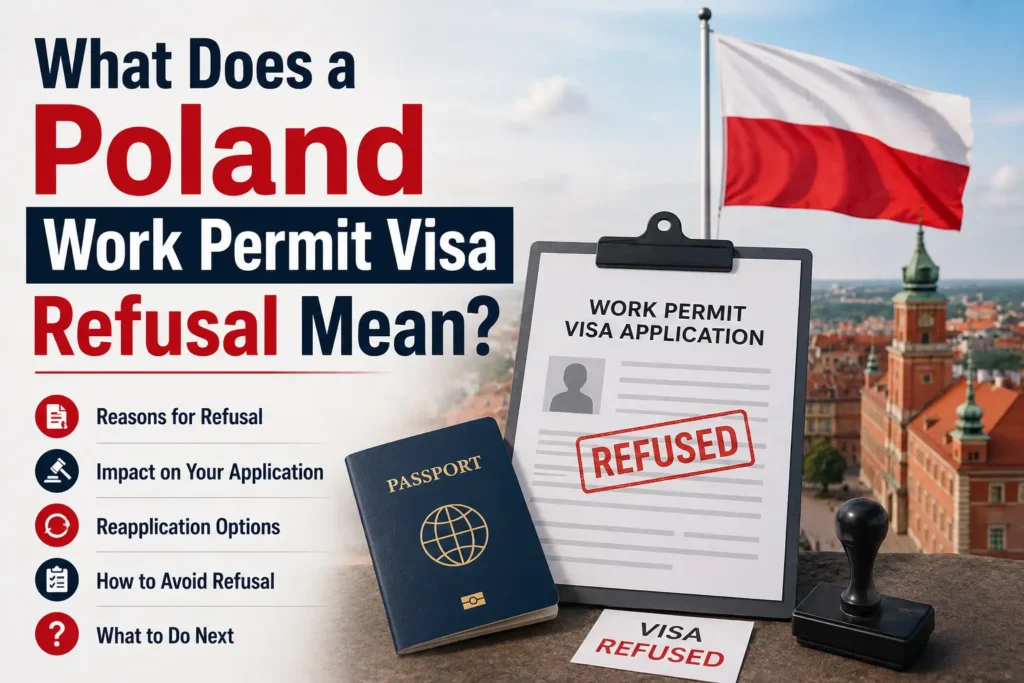
A Poland work permit visa refusal means that the Polish authorities have reviewed your application and determined that it does not meet the required conditions for approval. This decision can be based on several factors, including incomplete documentation, insufficient financial evidence, inconsistencies in the application, or concerns regarding the employer.
It is important to understand that a refusal does not necessarily mean you can never apply again. In many cases, applicants can correct the identified issues and submit a stronger application in the future.
Top Reasons for Poland Work Permit Visa Refusal
Top Reasons for Poland Work Permit Visa Refusal
One of the most common reasons for visa refusal is missing or inaccurate documents. Polish immigration authorities carefully examine every document submitted with the application.
Common document-related issues include:
- Missing supporting documents
- Incorrectly completed application forms
- Expired passport
- Untranslated documents
- Inconsistent information across documents
Even a small mistake can create doubts about the authenticity of the application and lead to refusal.
2. Unverified or Suspicious Job Offer
The legitimacy of the employer plays a significant role in the visa approval process. If immigration officers suspect that the job offer is not genuine or discover irregularities with the employer, the application may be refused.
Applicants should always verify:
- The employer's registration status
- The validity of the work permit
- The authenticity of the employment contract
- Company contact information
Working with a legitimate employer significantly improves your chances of approval.
3. Insufficient Financial Evidence
Applicants must demonstrate that they can support themselves during the initial period of their stay in Poland. If financial records appear weak or incomplete, authorities may question the applicant’s ability to manage living expenses.
Examples of financial concerns include:
- Low bank balance
- Unexplained large deposits
- Inconsistent income records
- Missing financial statements
Providing clear and transparent financial documentation is essential for a successful application.
4. Previous Visa Violations or Immigration Issues
A history of immigration violations can negatively affect your visa application. Authorities may review your travel history to assess compliance with immigration laws.
Potential concerns include:
- Overstaying a previous visa
- Deportation from another country
- Breach of immigration regulations
- Providing false information in past applications
A clean travel record generally strengthens an applicant’s credibility.
5. Inconsistent Information in the Application
All information provided in the application must match the supporting documents. Any discrepancies can raise concerns and lead to refusal.
Common inconsistencies include:
- Different employment details
- Incorrect personal information
- Mismatched addresses
- Contradictory travel history
Before submission, carefully review every section of your application to ensure accuracy.
6. Failure to Demonstrate Genuine Intent
Visa officers need to be confident that the applicant intends to work legally in Poland and comply with all immigration requirements.
Applications may be questioned if:
- The purpose of travel is unclear
- Employment details are inconsistent
- Supporting documents do not align with the stated job role
Providing complete and credible evidence helps establish genuine intent.
How to Avoid Poland Work Permit Visa Refusal
While no visa approval can be guaranteed, applicants can significantly reduce the risk of refusal by following best practices.
Ensure that all required documents are submitted in the correct format and translated when necessary.
Always confirm that the employer is legally registered and authorized to hire foreign workers.
Keep bank statements updated and ensure your financial situation can support your planned move.
Double-check all information before submission to eliminate errors and inconsistencies.
If you are unsure about the process, consulting an experienced immigration advisor can help identify potential issues before submission.
What to Do After a Poland Work Visa Refusal
Receiving a refusal does not mean the end of your immigration journey. The first step is to carefully read the refusal letter and understand the exact reason behind the decision.
Once the reason is identified, you can:
- Correct the issues highlighted by the authorities.
- Gather additional supporting documents.
- Clarify any missing information.
- Consider filing an appeal if eligible.
- Reapply with a stronger application.
Taking a strategic approach can improve your chances during a future application.
Can You Reapply After a Poland Work Visa Refusal?
Yes, you can generally reapply after a Poland work visa refusal. However, submitting the same application without addressing the refusal reasons is unlikely to produce a different outcome.
Before reapplying, make sure that:
- Previous mistakes have been corrected.
- Additional supporting evidence is included.
- Financial documents are strengthened.
- Employment documents are verified and updated.
A well-prepared reapplication often has a much higher chance of success.
Tips to Improve Your Poland Work Visa Approval Chances
- Submit complete and accurate documentation.
- Work only with genuine employers.
- Maintain sufficient financial proof.
- Ensure consistency across all documents.
- Follow immigration regulations carefully.
- Be honest and transparent throughout the process.
These simple but important steps can help build a stronger application and increase your chances of approval.
Conclusion
A Poland work permit visa refusal can occur for various reasons, ranging from incomplete documentation to financial concerns or issues with employment verification. Understanding these common refusal factors allows applicants to prepare more effectively and avoid costly mistakes.
If your application has been refused, carefully review the refusal reasons, address any weaknesses, and prepare a stronger application before reapplying. With proper planning, accurate documentation, and genuine employment opportunities, your chances of obtaining a Poland work permit visa can improve significantly.
FAQs About Poland Work Permit Visa Refusal
A Poland work permit visa can be refused for several reasons, including incomplete documentation, insufficient financial proof, inconsistent information, a questionable job offer, or previous immigration violations. The refusal letter usually explains the specific reason for the decision.
Yes, you can reapply after a Poland work visa refusal. Before submitting a new application, it is important to identify the reason for the refusal and correct any issues that may have affected your previous application.
There is no fixed waiting period in most cases. You can reapply once you have addressed the concerns mentioned in the refusal letter and gathered the necessary supporting documents to strengthen your application.
Yes, applicants may have the option to appeal a refusal decision. The appeal process and deadline are typically mentioned in the refusal notice issued by the Polish authorities. Reviewing the instructions carefully is essential before filing an appeal.
A visa refusal does not automatically prevent future approvals. However, immigration authorities may review your previous application history. Being transparent and correcting past mistakes can help improve your chances in future applications.
Some of the most important documents include a valid passport, work permit, employment contract, visa application form, proof of accommodation, financial documents, travel insurance, and any additional documents requested by the embassy or consulate.
Yes, submitting a fake or unverifiable job offer is one of the most common reasons for visa refusal. Applicants should always verify the legitimacy of the employer and ensure that all employment documents are authentic and legally issued.
To improve your approval chances, submit complete and accurate documents, provide strong financial evidence, ensure consistency in your application, verify your employer’s credentials, and carefully follow all immigration requirements before applying.